04 November 2026
What is Close Quarter Battle (CQB)? Meaning, purpose and tactics
Close quarter battle (CQB) refers to high-intensity, close-range combat scenarios conducted primarily with firearms in restricted or confined environments, such as buildings, urban structures, ships, or vehicles. Designed for military special forces and law enforcement special units, CQB requires specialized tactics, rapid decision-making, and high-precision tactical equipment. While often used interchangeably with Close Quarters Combat (CQC), CQB specifically focuses on firearms-based engagement, whereas CQC incorporates hand-to-hand and edged-weapon techniques. Integrated tactical solutions provided by defense leaders – including Beretta, Benelli, Sako, and Steiner – ensure operators maintain tactical dominance in high-risk CQB military missions.
Table of Contents
- What is close Quarter Battle (CQB)?
- CQB vs CQC: What’s the Difference?
- When and why is CQB used?
- Core elements of a CQB engagement
What is Close Quarter Battle (CQB)?
Understanding “what is close quarter battle” begins with recognizing the distinct challenges of high-risk, confined operational environments. CQB is defined as a tactical physical engagement between multiple forces conducted at very close range – often within meters or feet – using small arms and light weapons.
To fully grasp the definition of CQB, one must consider the spatial constraints under which operators’ function. Close quarter battle takes place inside structures, urban terrain, narrow hallways, underground complexes, and vehicles. In these environments, line-of-sight is severely restricted, reaction time is compressed to fractions of a second, and potential cover or concealment is minimal.
Unlike open-field engagements where long-range optics and ballistic trajectories dictate combat strategy, CQB military operations are shaped by speed, surprise, and violent physical action. What does CQB stand for in modern defense doctrine? It stands for a highly specialized tactical discipline demanding rapid target discrimination, fluid weapon handling, and seamless team synchronization to neutralize threats while mitigating collateral risk.
CQB vs CQC: what’s the difference?
In military and defense terminology, terms are frequently confused or merged. When comparing cqb vs cqc, understanding the nuance behind each meaning of cqb and Close Quarters Combat is crucial for equipment selection and doctrine development.
- Close Quarter Battle (CQB): refers specifically to short-range engagements conducted with firearms, including short-barrel rifles, submachine guns, combat shotguns, and sidearms.
- Close Quarters Combat (CQC): broadens the operational scope to encompass what is close quarters combat in its entirety-including hand-to-hand martial arts, combative, and edged-weapon interactions alongside firearms.
Knowing what close quarter combat is versus what is a cqb engagement directly impacts training focus and equipment configurations. Close quarters combat requires physical combative preparation and specialized protective padding, whereas cqb military readiness centers on firearm maneuverability, recoil control, thermal/night optics, and rapid transition under stress.
CQB vs CQC: comparison at a glance
| Feature | Close Quarter Battles (CQB) | Close Quarters Combat (CQC) |
| Primary Focus | Firearms-based combat in tight/confined spaces | Comprehensive close-range combat (armed & unarmed) |
| Core Weaponry | Carbines, SBRs, tactical shotguns, handguns | Firearms, edged weapons, blunt impact tools, hands-on combatives |
| Operational Environment | Buildings, urban structures, ships, vehicles | Buildings, open terrain, hand-to-hand grapple scenarios |
| Key Skillset | Weapon handling, dynamic entry, rapid target acquisition | Combatives, weapon retention, edged-weapon defense, firearms proficiency |
| Primary Operators | Military Special Forces, SWAT & Tactical Response Units | Military Infantry, Special Forces, Law Enforcement Officers |
When and why is CQB used?
The operational necessity of close quarter battle arises when high-value objectives must be secured within structurally congested areas where heavy firepower or air support cannot be deployed.
Typical operational scenarios include:
- Room Clearing & Building Assaults: methodical or dynamic entry into fortified enemy structures during counter-terrorism or counter-insurgency operations.
- Hostage Rescue: high-precision entries where lethal force must be selectively applied without endangering hostages.
- Urban Warfare: maritime interdiction, vessel boarding, search and seizure (VBSS), and room-to-room engagements in densely built-up environments.
Both military special operations forces (SOF) and specialized law enforcement counter-terror units depend heavily on these doctrine-driven skill sets. To explore how tactical units kit out for these demanding missions, read our complete guide on SWAT weapons and equipment.
Core elements of a CQB engagement
Mastering close quarter battle requires viewing CQB not merely as a set of mechanical shooting drills, but as an integrated, multi-layered tactical ecosystem. Operational success hinges on four interconnected pillars:
- Weapons and ammunition: short-barreled rifles, tactical combat shotguns, and secondary sidearms engineered for absolute reliability in high-stress, confined environments.
- Protective and tactical gear: high-cut ballistic helmets, plate carriers, and integrated night-vision/thermal optics allowing seamless situational awareness in low-light conditions.
- Operational tactics and communication: dynamic entry procedures, threshold evaluation, stealth movement, and non-verbal team coordination.
- Rigorous and realistic training: repeated shoot-house stress drills, live-fire discrimination training, and force-on-force simulation. To see how operational units hone these skills, read our in-depth insight on CQB training: how military and law enforcement prepare for Close-Quarters Operations.
Ultimately, mastering these core elements ensures that operators can maintain overwhelming momentum, mitigate split-second operational risks, and execute mission objectives with uncompromising precision.
Integrated defense solutions with BDT
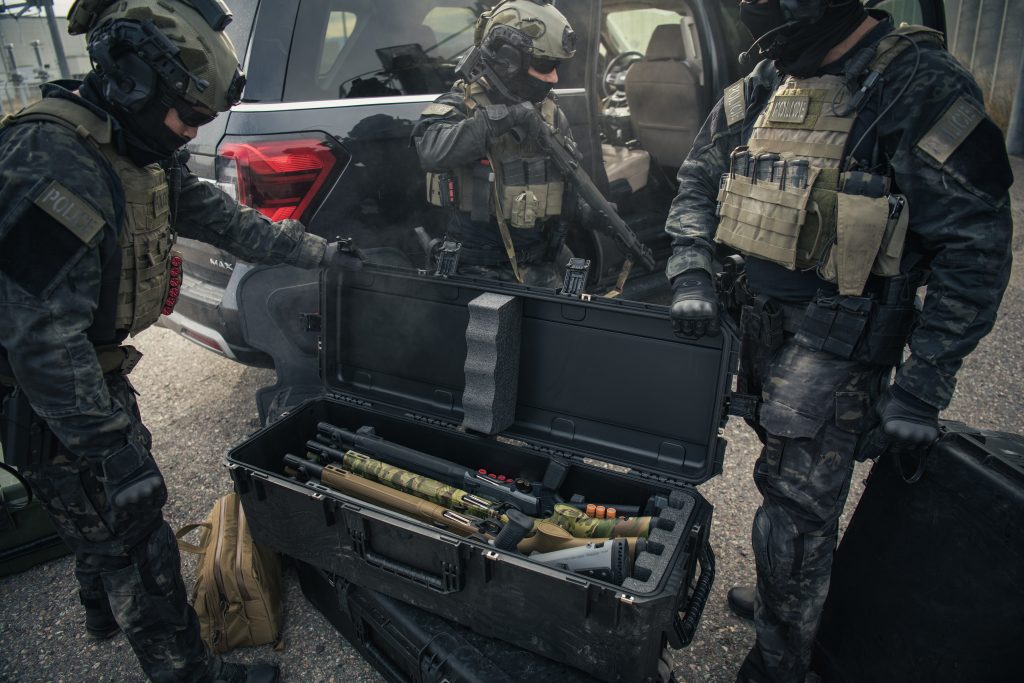
An effective operational outcome depends on every component of an operator’s kit working in perfect harmony. As a unified alliance, Beretta Defense Technologies (BDT) integrates world-renowned brands to deliver full-spectrum CQB capabilities:
- Small arms platforms (Beretta, Benelli, Sako): precision sidearms, assault rifles, submachine guns, breaching combat shotguns, and tactical sniper systems built for absolute reliability.
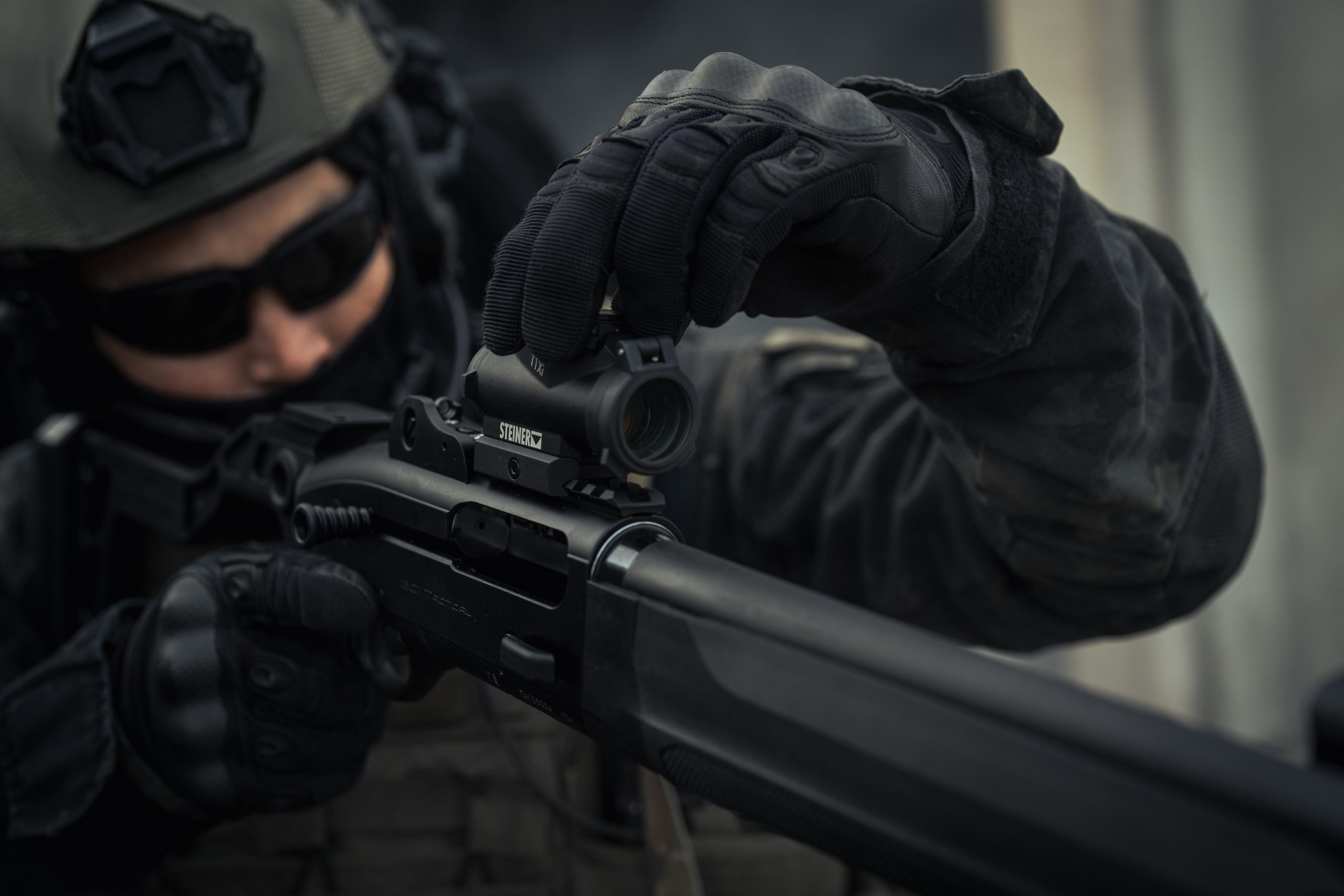
- Optics & Electro-Optics (Steiner Optics and Steiner e-Optics): advanced day scopes, red dot sights, laser aiming devices, and thermal/night-vision imaging solutions essential for fast target acquisition in low-light environments.
- Specialized ammunition (RWS, SwissP, Norma, MFS): high-precision, mission-matched calibers including subsonic, armour-piercing, and low-wall-penetration loads engineered for CQB environments.
- Pyrotechnics and distraction (Centanex): specialized distraction and smoke devices designed for entry preparation and temporary threat neutralization.
The practical effectiveness of these synergies was recently demonstrated live during the BDT Live Fire Days 2026, where military and law enforcement delegates tested BDT’s integrated ecosystems in real-world combat scenarios.
Discover more about complete mission readiness in our comprehensive breakdown of CQB weapons, accessories and tactics, at Beretta Defense Technologies website.